The Unsung Champion of the Periodic Table – Three Essential Stories About Boron

August 10, 2026

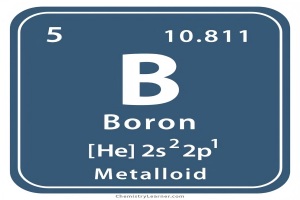
If you still recall your high school chemistry lessons, you may remember the opening line of the element chant: Hydrogen, Helium, Lithium, Beryllium, Boron – yet most forget all about boron shortly after memorizing it. Boron (chemical symbol B) is the fifth element in the periodic table. It is uniquely special in nature: unlike carbon, oxygen or iron, which form via stellar nuclear fusion, boron originates as cosmic fragments generated when high-energy cosmic rays collide with carbon, oxygen and nitrogen atomic nuclei in interstellar gas. Simply put, boron is a cosmic accident — and this unique origin grants it an irreplaceable role in human civilization.


I. What Is Boron?

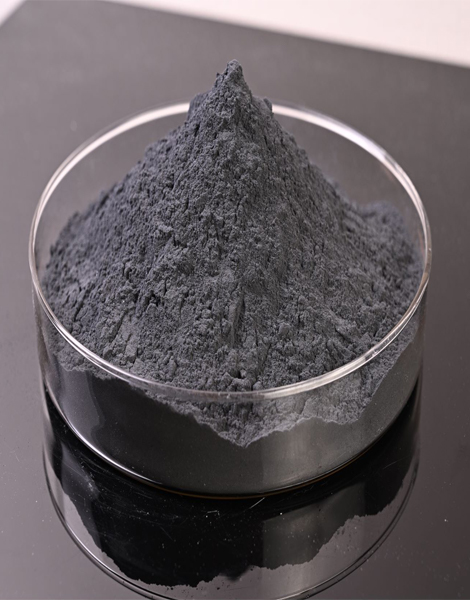
Boron is a non-metallic element with two common allotropes of elemental form. Amorphous boron exists as brown to black powder with relatively high chemical activity; crystalline boron is grey-black with metallic luster, boasting a Mohs hardness of 9.5, second only to diamond. It has a melting point of approximately 2076 °C, a boiling point of 3927 °C, and a density of merely 2.34 g/cm³ — lighter than aluminum yet far more heat-resistant and harder than steel.

Natural boron consists of two stable isotopes: ¹⁰B and ¹¹B. Boron-10 features exceptional thermal neutron capture capacity, serving as a core material for nuclear reactor control and safe operation. Boron-11 barely absorbs neutrons, making it an indispensable doping source for semiconductor chip manufacturing. These drastically divergent properties of the two isotopes define boron’s dual identity in cutting-edge high-tech industries: the guardian of nuclear safety, and the precision regulator for chip fabrication.


II. Three Stories of Boron

Story 1: Our 4,000-Year-Old Companion

As early as 200 BCE, ancient Egyptians utilized borax to produce glass and solder gold. Though unaware of the element boron itself, they had mastered its practical applications: borax lowers glass melting points and boosts transparency, while also melting metal oxides to facilitate welding. Ancient Arabs named borax “Buraq”, meaning flux. In ancient China, borax was used as herbal medicine; Li Shizhen explicitly documented its medicinal properties in the Compendium of Materia Medica during the Ming Dynasty. Separated by continents, ancient civilizations independently discovered the value of this shared element without knowing its unified identity.


Story 2: The Race Among Three Scientists

Humans had used boron compounds for thousands of years, yet pure elemental boron was not isolated until 1808. That year, British chemist Humphry Davy produced brown boron via electrolysis of molten boron trioxide. Almost simultaneously, French chemists Joseph Louis Gay-Lussac and Louis Jacques Thénard independently synthesized elemental boron by reducing boric acid with metallic potassium. Separated by the English Channel, the three scientists achieved this groundbreaking breakthrough nearly in tandem. The name “Boron” derives from the Arabic “Buraq”, a tribute to thousands of years of human borax usage preceding their discovery.


Story 3: From Laboratory to Daily Life

Boron entered mainstream modern life in the 20th century. The invention of borosilicate glass (e.g., Pyrex heat-resistant glass) created lab and kitchenware resistant to cracking under sharp temperature swings. Boron-containing detergents and bleaches soon became household staples. Scientists confirmed boron as an essential nutrient for plant growth — boron deficiency causes root rot and total crop failure. Later research verified boron as a vital trace element for the human body; a 1981 study first proved boron supports bone mineralization. This tiny element has traveled from ancient Egyptian glass workshops to underpin modern agriculture, pharmaceuticals and everyday households.


III. Boron’s Presence in Daily Life

Boron in Your Kitchen

Your drinking glasses and glass food storage containers labeled “heat-resistant glass” or “borosilicate glass” all contain boron. Borates reduce glass melting points, enhance transparency and thermal shock resistance to prevent breakage under sudden heating or cooling. Boron is also key to smooth glazes on ceramic tableware and enamel cookware, preventing glaze peeling and boosting gloss.


Boron in Laundry & Cleaning Products

Detergents represent one of Europe’s major boron consumption sectors. Borax is a feedstock for sodium perborate, the bleaching agent in laundry powder. It also softens hard water and adjusts pH values to elevate cleaning efficiency.


Boron for Fruits & Vegetables on Your Table

Boron is an essential trace element for plant metabolism. Boron deficiency stunts crop growth and impairs fruit development. Agricultural boron fertilizers are critical to securing high yields and quality for legumes, vegetables and fruits. Every fruit and vegetable you consume relies on boron during cultivation.


Boron for Human Health

Boron is an indispensable trace mineral for humans. Research confirms trace boron intake prevents osteoporosis and accelerates calcium metabolism in the body. In conventional medicine, borax and boric acid are mild alkalis widely used as topical antiseptics. More innovatively, boron delivers an irreplaceable function in targeted cancer therapy via Boron Neutron Capture Therapy (BNCT).


Boron Inside Your Phones, Computers & New Energy Vehicles

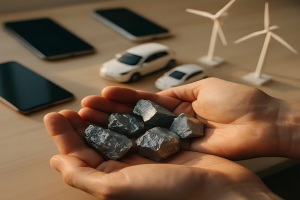
Ultra-high-purity crystalline boron acts as a core dopant for semiconductor chip manufacturing. Hexagonal boron nitride is the unsung hero of thermal management for advanced chips. Boron carbide is a lightweight key material for ballistic armor and wear-resistant components. Often unseen by consumers, boron underpins the entire modern industrial chain spanning 5G communications, electric vehicles, nuclear safety and aerospace exploration.


Closing Remarks

Boron is a cosmic accident, humanity’s four-millennium ally, an element uncovered concurrently by three scientists in 1808, and an omnipresent material found in your kitchen, laundry room, dining table, medicine cabinet and mobile devices. Unassuming yet irreplaceable, low-profile yet ubiquitous.

This is boron — one of the most understated yet essential elements on the periodic table.

This article is compiled by the science popularization team of BoronHub Solutions Limited. BoronHub specializes in R&D and global supply of high-purity elemental boron, boron isotopes and functional boron-based materials, committed to empowering cutting-edge technology through innovative boron materials.


Hot tags :

crystalline boron

Latest Blog
leave a message
leave a message
Interested in our boron materials? Please leave a message with your requirements — our technical sales team will respond within 24 hours.
leave a message
Interested in our boron materials? Please leave a message with your requirements — our technical sales team will respond within 24 hours.

home

products

WhatsApp

Contact Us